
When you walk into a comfortable building on a scorching summer day or step into a warm office during winter, you’re experiencing the magic of HVAC equipment at work. But what exactly is HVAC equipment, and how does it create these comfortable environments we often take for granted?
HVAC equipment refers to the integrated systems and components designed for heating, ventilation, and air conditioning in residential, commercial, and industrial buildings. These sophisticated systems regulate temperature, humidity, and air quality to ensure optimal comfort and health for occupants year-round.
What is HVAC Equipment?
HVAC equipment refers to integrated heating, ventilation, and air conditioning systems that regulate indoor temperature, humidity, and air quality in buildings. These systems include furnaces, boilers, air conditioners, heat pumps, ductwork, thermostats, and air handlers working together to create comfortable, healthy indoor environments.
Key components:
- Heating units (furnaces, boilers, heat pumps) raise indoor temperatures
- Ventilation systems (fans, ducts, air handlers) circulate fresh air and remove pollutants
- Air conditioning units (compressors, evaporators, condensers) cool and dehumidify spaces
HVAC systems are essential infrastructure in modern buildings, with 87% of UAE homes and virtually all commercial buildings relying on these systems for year-round comfort in extreme climates.
Core Components of HVAC Equipment
Primary Heating Equipment
- Furnaces represent the most common heating solution in many regions. Gas furnaces rely on an interior heat exchanger to generate warmth, where the heat exchanger absorbs heat from combustion gases and transfers it throughout the building via ductwork.
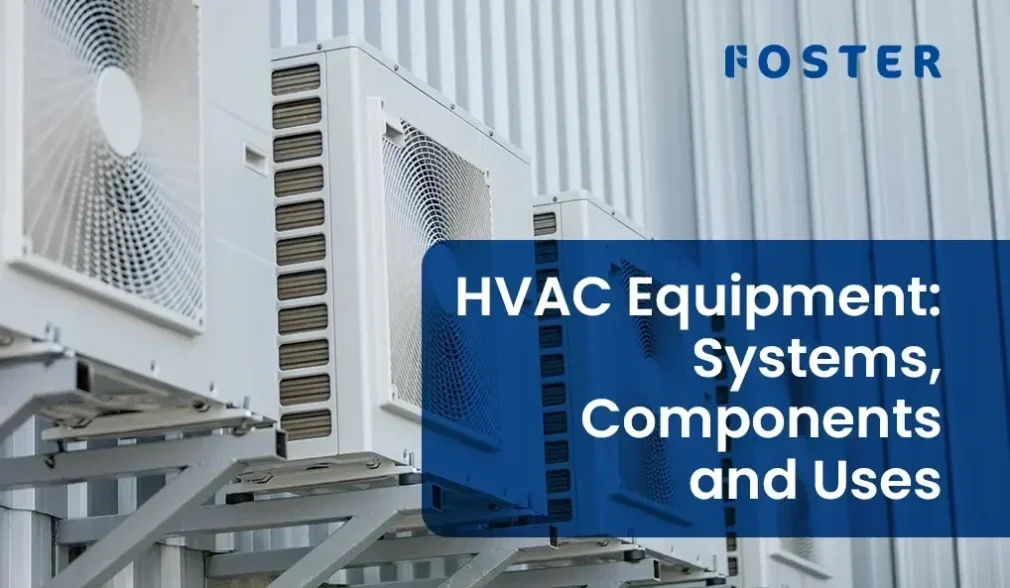
- Heat Pumps offer remarkable versatility in HVAC systems. A typical air source heat pump system consists of two major components: an outdoor unit and an indoor air handler unit, both containing various important sub-components. Unlike traditional heating systems, heat pumps can both heat and cool spaces by transferring heat rather than generating it.
- Boilers serve as the heart of hydronic heating systems, combusting fuel to heat water that circulates through radiators or radiant floor systems. These systems are particularly common in older buildings and certain geographic regions.
Cooling and Air Conditioning Systems
- Central Air Conditioners form the backbone of cooling in many buildings. These systems remove heat and humidity from indoor air, transferring it outside to maintain comfortable temperatures even in extreme conditions.
- Ductless Mini-Split Systems provide targeted cooling without requiring extensive ductwork. These systems consist of outdoor condensing units connected to one or more indoor air handling units, offering flexible temperature control for specific zones.
- Packaged Units combine heating and cooling components in a single outdoor cabinet, making them ideal for buildings with limited indoor space for equipment.
Ventilation Components
- Air Handlers serve as the circulation powerhouse of HVAC systems. An air handler is the indoor part of an air conditioner or heat pump that moves cooled or heated air throughout the ductwork, ensuring even distribution of conditioned air.
- Ductwork Systems form the circulatory system of HVAC equipment, consisting of sheet metal or flexible pipes that carry air from heating and cooling units to various spaces throughout buildings.
- Ventilation Fans and Systems ensure proper air exchange, removing stale air while introducing fresh outdoor air to maintain healthy indoor air quality.
Advanced HVAC Equipment and Accessories
Modern HVAC systems often incorporate sophisticated accessories to enhance comfort and efficiency:
- Smart Thermostats serve as the intelligent control centers, allowing precise temperature control, scheduling, and remote monitoring capabilities.The Department of Energy recommends programmable thermostats for significant energy savings.
- Air Purification Systems integrate with HVAC equipment to remove allergens, pollutants, and contaminants from circulating air, significantly improving indoor air quality.According to the EPA’s indoor air quality guidelines, proper ventilation is crucial for maintaining healthy indoor environments.
- Humidity Control Equipment includes both humidifiers and dehumidifiers that work with HVAC systems to maintain optimal moisture levels year-round.
Types of HVAC Systems
Split Systems
Each type of HVAC system falls into one of two categories: ducted or ductless. In a ducted system, the main unit pushes air through a series of air ducts to cool or heat a building. Split systems represent the most common configuration, featuring separate indoor and outdoor units connected by refrigerant lines.
Hybrid HVAC Systems
Hybrid HVAC units offer capabilities of both centralized and decentralized technologies for greater efficiency. A common configuration combines a heat pump and a furnace, automatically selecting the most efficient heating method based on outdoor temperatures.
Commercial and Industrial HVAC Equipment
Large-scale HVAC equipment serves commercial and industrial facilities with significantly higher capacity requirements. These systems often feature:
- Rooftop Package Units for efficient space utilization
- Chiller Systems for large cooling loads
- Variable Refrigerant Flow (VRF) Systems for precise zone control
- Building Automation Systems for centralized monitoring and control
Comprehensive HVAC System Types Comparison
| System Type | Best For | Operating Cost | Efficiency | Pros | Cons | Ideal Climate |
| Split System | Residential homes, small offices | Moderate | SEER 14-21 | • Most common • Easy to install • Quiet operation • Good efficiency | • Requires ductwork • Limited zoning • Outdoor space needed | All climates |
| Packaged Unit | Commercial buildings, rooftops | Moderate-High | SEER 13-18 | • Space-saving • All-in-one design • Easy maintenance access • Durable | • Less efficient than split • Visible outdoor unit • Noisy | Hot, humid climates |
| Ductless Mini-Split | Apartments, room additions, retrofits | Low-Moderate | SEER 18-30 | • No ductwork needed • Excellent efficiency • Zone control • Flexible installation | • Higher upfront cost • Visible indoor units • Limited heating in extreme cold | All climates, especially moderate |
| Heat Pump System | Moderate climates, energy-conscious homes | Low | SEER 15-20, HSPF 8-13 | • Heating & cooling in one • Energy efficient • Reduced carbon footprint • Lower operating costs | • Less effective in extreme cold • Higher upfront cost • Backup heat needed in cold zones | Moderate to warm climates |
| Hybrid Heat Pump | Cold climates with temperature fluctuations | Low-Moderate | SEER 16-20 | • Automatic fuel switching • Maximum efficiency • Works in all temperatures • Cost-effective | • Complex installation • Higher initial investment • Requires both systems | Cold climates with variable temps |
| Geothermal Heat Pump | Long-term investment, eco-conscious | Very Low | EER 20-30 | • Extremely efficient • Low operating costs • 50+ year lifespan • Minimal maintenance | • Very high upfront cost • Requires land area • Complex installation | All climates |
| VRF/VRV System | Large commercial, multi-zone buildings | Low-Moderate | EER 15-20+ | • Precise zone control • Simultaneous heating/cooling • Highly efficient • Reduced ductwork | • Expensive initial cost • Complex installation • Specialized maintenance | Commercial applications, all climates |
| Chiller System | Large commercial, industrial facilities | High | EER 10-18 | • Handles massive loads • Centralized cooling • Scalable • Long lifespan | • Very expensive • Large equipment space • High energy use • Complex operation | Large facilities, hot climates |
| Hydronic System | Older buildings, multi-story, luxury homes | Moderate-High | AFUE 80-95% | • Even heat distribution • Quiet operation • Compatible with multiple fuels • Zoned comfort | • Heating only • Slow temperature response • Requires boiler maintenance • Risk of leaks | Cold climates |
| Portable AC/Heater | Temporary needs, spot cooling/heating | High | EER 8-12 | • No installation • Mobile • Low upfront cost • Rental options |
For businesses requiring HVAC equipment solutions, professional consultation ensures proper sizing and system selection for optimal performance and efficiency.
HVAC Equipment Applications and Uses
Residential Applications
Home HVAC equipment focuses on comfort, efficiency, and quiet operation. Residential systems typically include:
- Central air conditioning and heating systems
- Ductless mini-split units for specific zones
- Whole-house air purifiers and humidity control
- Smart thermostats for energy management
Commercial and Office Buildings
Commercial HVAC equipment must handle larger spaces, more occupants, and varying load requirements throughout the day. These systems often incorporate:
- Variable air volume (VAV) systems
- Energy recovery ventilators
- Advanced filtration systems
- Building management integration
Industrial Applications
Industrial HVAC equipment addresses unique challenges including:
- Process cooling and heating requirements
- Contamination control
- Explosive-proof equipment for hazardous environments
- High-capacity systems for large facilities
When industrial facilities require comprehensive HVAC services, experienced contractors ensure systems meet both comfort and process requirements.
HVAC Equipment Efficiency and Performance
Energy Efficiency Ratings
Understanding efficiency ratings helps in selecting optimal HVAC equipment:
SEER2 (Seasonal Energy Efficiency Ratio) measures cooling efficiency across various temperature ranges, with higher numbers indicating better efficiency.
HSPF2 (Heating Seasonal Performance Factor) applies specifically to heat pump heating efficiency during colder months.
AFUE (Annual Fuel Utilization Efficiency) rates furnace and boiler efficiency as a percentage of fuel converted to usable heat.
Smart Technology Integration
Modern HVAC equipment incorporates advanced technologies for enhanced performance:
- Variable-speed motors adjust airflow based on demand
- Smart sensors monitor air quality and adjust operations accordingly
- Predictive maintenance systems alert users to potential issues before failures occur
- Remote monitoring capabilities enable professional diagnostics and optimization
Portable and Specialized HVAC Equipment
Portable HVAC Solutions
Portable HVAC equipment serves temporary or supplemental needs:
- Portable air conditioners for spot cooling
- Temporary heating units for construction sites or emergency situations
- Mobile dehumidifiers for moisture control during renovations
- Rental equipment for short-term requirements
For businesses needing flexible solutions, HVAC rental services provide access to professional-grade portable equipment without the capital investment.
Specialized HVAC Equipment
Certain applications require specialized HVAC equipment:
- Clean Room Systems maintain precise temperature, humidity, and air quality for pharmaceutical and electronics manufacturing.
- Data Center Cooling utilizes specialized equipment to handle high heat loads from servers and IT equipment.
- Process HVAC serves manufacturing applications requiring specific environmental conditions.
HVAC Equipment Maintenance and Support
Preventive Maintenance
Regular maintenance ensures HVAC equipment operates efficiently and reliably:
- Filter replacement maintains air quality and system efficiency
- Coil cleaning preserves heat transfer effectiveness
- Refrigerant level checks ensure optimal cooling performance
- Electrical connection inspection prevents failures and safety hazards
Read our step-by-step guide on coil cleaning to understand the importance of regular maintenance.
Professional Service Requirements
HVAC equipment complexity necessitates professional service for:
- System commissioning after installation
- Diagnostic testing to identify performance issues
- Refrigerant handling requiring EPA certification
- Safety inspections to ensure code compliance
Access to quality HVAC spare parts ensures quick repairs and minimal downtime when equipment service is needed.
HVAC Equipment Selection Considerations
Climate Factors
Geographic location significantly influences HVAC equipment selection:
- Hot, humid climates benefit from high-efficiency cooling and dehumidification
- Cold climates require robust heating systems and heat pump alternatives
- Moderate climates allow for heat pump-only solutions
- Extreme climates may necessitate hybrid or backup systems
Building Characteristics
Physical building features affect HVAC equipment requirements:
- Building size determines system capacity needs
- Insulation quality impacts efficiency requirements
- Window orientation influences cooling loads
- Occupancy patterns affect ventilation needs
Economic Considerations
HVAC equipment investment involves multiple cost factors:
- Initial equipment costs vary significantly by system type and efficiency
- Installation expenses depend on system complexity and building modifications
- Operating costs reflect energy consumption and maintenance requirements
- Lifecycle costs consider equipment longevity and replacement timing
Future of HVAC Equipment Technology
Emerging Technologies
HVAC equipment continues evolving with technological advancement:
- Heat Pump Innovation includes cold-climate heat pumps capable of efficient operation in extreme conditions.
- Smart Grid Integration allows HVAC equipment to respond to utility demand signals and optimize energy consumption.
- Advanced Refrigerants reduce environmental impact while maintaining system performance.
- Artificial Intelligence enables predictive maintenance and automated optimization of HVAC equipment operation.
Sustainability Focus
Environmental considerations drive HVAC equipment development:
- Electrification reduces reliance on fossil fuels
- Energy storage integration enables load shifting and grid stabilization
- Renewable energy compatibility supports solar and wind power integration
- Circular economy principles promote equipment recycling and remanufacturing
Conclusion
HVAC equipment represents a sophisticated integration of heating, ventilation, and air conditioning technologies essential for modern building comfort and functionality. From basic residential units to complex commercial systems, understanding HVAC equipment helps building owners make informed decisions about comfort, efficiency, and sustainability.
Whether you’re considering new installation, system replacement, or equipment upgrades, working with experienced HVAC professionals ensures optimal performance and long-term satisfaction. The right HVAC equipment, properly installed and maintained, provides years of reliable comfort while supporting energy efficiency and environmental responsibility.
As technology continues advancing, HVAC equipment will become even more intelligent, efficient, and sustainable, making comfortable, healthy indoor environments accessible while minimizing environmental impact.
Ready to upgrade your HVAC system? Contact Foster International today for expert consultation and professional installation services that deliver long-lasting comfort and efficiency.
 Previous Post