

Your air conditioner is running, but something’s off- there’s a smell. Before you spray air freshener and move on, pay attention. The odor coming from your HVAC system is often your unit’s way of signaling a problem. Some smells are harmless and easy to fix; others demand immediate action.
Here’s exactly what each common AC smell means and what you should do about it.
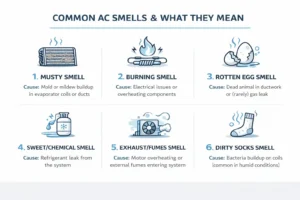
1. Musty or Moldy Smell- Mold and Mildew Buildup
This is the most common AC complaint. A musty, damp odor usually points to mold or mildew growing inside the system, on the evaporator coil, in the drain pan, or inside the ductwork.
The cause is excess moisture. When your AC cools air, condensation forms. If it doesn’t drain properly, it creates a perfect breeding ground for mold. A clogged condensate line or dirty air filter are typical culprits.
What to do: Replace or clean your air filters first. If the smell persists, schedule a professional coil cleaning and duct inspection. Regular HVAC servicing prevents moisture issues before they develop into mold problems.
2. Dirty Socks Smell – Bacteria on the Evaporator Coil
Known in the industry as “Dirty Sock Syndrome,” this odor is distinct, it smells exactly like a gym locker room. It’s caused by bacteria and biological growth on the evaporator coil, particularly after the unit has been idle for a period.
Not dangerous, but not something to ignore either. Bacteria circulating through your air supply can affect indoor air quality, especially for allergy or asthma sufferers.
What to do: This requires professional coil cleaning, it can’t be adequately resolved with DIY methods alone.
3. Burning Smell – Electrical Issue or Overheated Component
Turn the system off immediately. A burning smell from an AC unit, especially if it resembles burning plastic, gunpowder, or an electrical fire, signals a serious problem. This could be frayed wiring, an overheated motor, a short circuit, or a failing electronic component.
According to the U.S. Fire Administration, electrical fires are among the most common causes of home fires. A burning HVAC system should be treated as a potential emergency.
What to do: Switch off the unit at the thermostat and the circuit breaker. Open windows for ventilation. Call an HVAC technician, do not run the system again until it has been inspected.
4. Rotten Egg or Sulfur Smell – Possible Gas Leak
This is the most urgent smell on this list. A rotten egg odor near your HVAC system can indicate a natural gas leak nearby. Gas suppliers add a sulfur compound called mercaptan to natural gas specifically so leaks can be detected by smell.
What to do: Leave the building immediately. Do not switch any electrical devices on or off. Call your gas supplier’s emergency line and contact emergency services. Do not return until the building is cleared.
5. Sweet or Fruity Smell – Refrigerant Leak
A faintly sweet, chemical-like odor often points to a refrigerant leak. Refrigerants such as R-22 and R-410A can emit this smell when escaping from a cracked coil or damaged line.
Beyond being a system efficiency issue, refrigerant exposure can cause dizziness, nausea, and headaches in enclosed spaces. The EPA regulates refrigerant handling specifically due to these health and environmental risks.
What to do: Don’t attempt to locate or seal the leak yourself. Switch off the unit and contact a certified HVAC technician. Refrigerant repair and recharging must be handled by a licensed professional.

6. Exhaust or Chemical Fumes – Fluid Leak into Motor
If you smell something similar to car exhaust or chemical fumes, fluid may be leaking from the system into a warm component such as the motor. This is more common in older units with deteriorating seals or lines.
What to do: Turn off the system and contact a professional. Running the unit will accelerate the damage and could create a fire hazard.
7. Stale or Garbage Smell – Dead Animal in Ductwork
Small animals, birds, rodents, lizards, sometimes enter ductwork and air handler units, particularly during cooler months or in Gulf region climates where outdoor units are accessible. If one dies inside, the decomposition smell is unmistakable.
What to do: Turn off the unit. Contact an HVAC professional to inspect and clear the ductwork. Once the animal is removed and the area disinfected, the smell clears quickly.
8. Cigarette or Stale Smoke Smell – Residue in the System
If you’ve moved into a space where a previous occupant smoked, the HVAC system may have absorbed smoke particles in the filters, coils, and ducts. Every time the system runs, it redistributes these particles.
What to do: Replace all air filters immediately. A professional deep clean of the evaporator coil and duct system is the most effective long-term solution.
When to Call a Professional vs. Try a DIY Fix
| Smell | DIY? | Call a Pro? |
| Musty / moldy | Replace filter | Yes, if smell persists |
| Dirty socks | No | Yes |
| Burning | No — turn off immediately | Yes, urgently |
| Rotten egg / gas | No — evacuate | Emergency services first |
| Sweet / refrigerant | No | Yes |
| Exhaust fumes | No | Yes |
| Dead animal | No | Yes |
| Cigarette smoke | Replace filter | Yes, for deep clean |
Prevention: The Simplest Way to Avoid HVAC Odors
Most odor issues stem from neglected maintenance. Here’s what keeps your system smelling clean year-round:
- Replace or clean air filters every 1–3 months. A dirty filter restricts airflow, traps moisture, and promotes mold growth, it’s the single most impactful DIY maintenance step.
- Schedule annual professional servicing. A trained technician will clean evaporator coils, flush the condensate line, inspect ductwork, and catch issues before they escalate. If you’re in the UAE or wider Middle East, Foster International’s HVAC Services include comprehensive preventive maintenance for both residential and commercial systems.
- Inspect the drain pan and condensate line. Especially in high-humidity environments, these areas accumulate sludge quickly and should be checked seasonally.
- Ensure proper unit sizing. An oversized unit short-cycles, leaving excess humidity in the air. An undersized unit runs constantly and strains components. Both scenarios contribute to moisture-related odors. Learn more about selecting the right system in our guide on HVAC Equipment Solutions.
Final Word
Your AC shouldn’t smell like anything. A clean, well-maintained HVAC system produces neutral, filtered air. When it doesn’t, treat the odor as diagnostic information, not just a nuisance.
Most musty or mild smells are fixable with basic maintenance. But burning, gas, refrigerant, and chemical odors are signals to act immediately. Don’t run a system you’re unsure about.
If you’re experiencing persistent HVAC odors or are due for a service check, contact the Foster International team for expert HVAC inspection and maintenance across the UAE.
 Previous Post