
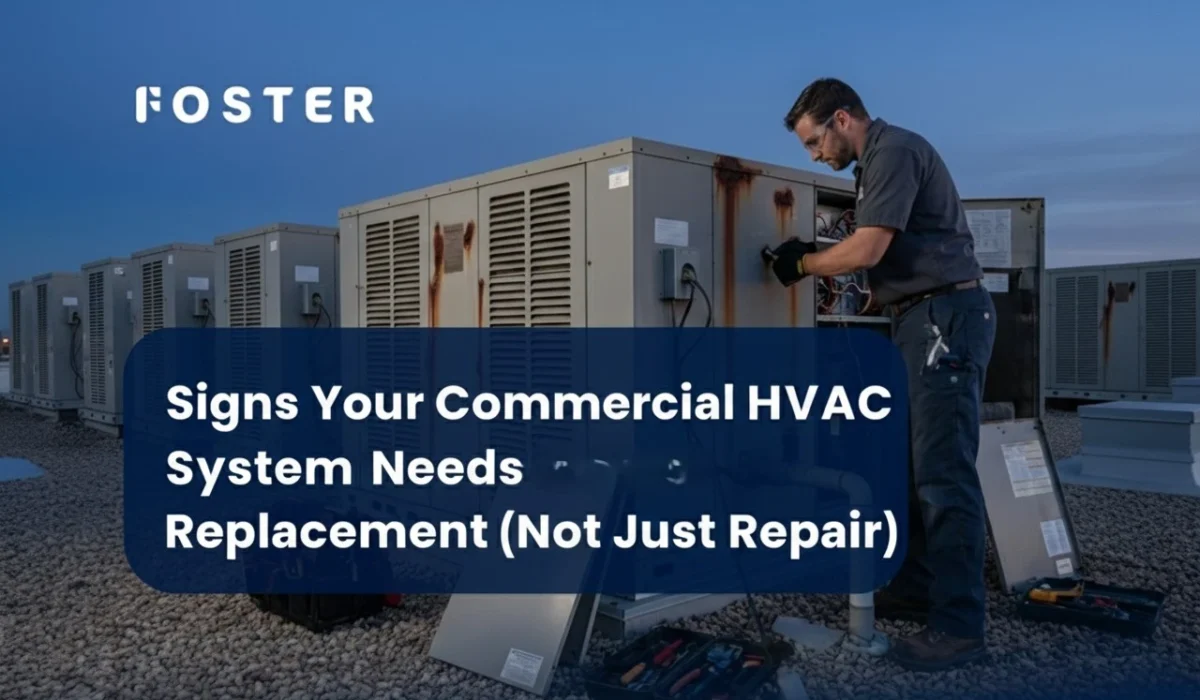
In the harsh Middle Eastern climate, your commercial HVAC system works around the clock to keep indoor environments comfortable. While routine maintenance helps extend equipment life, there inevitably comes a time when replacing the unit simply makes better financial sense. Knowing the difference between a repairable problem and a system at the end of its life can be a huge time- and money-saver for your business.
Related: HVAC Services | HVAC Equipment Solutions
When Repairs No Longer Make Financial Sense
If your HVAC technician is becoming a familiar face at your facility, it’s time to assess whether on-going repairs are truly cost-effective. The frequent break-downs are warning that core components of your system wear out beyond isolated fixes. When repair costs start getting close to 50% of a new system’s value, replacement usually provides better long-term value.
The calculation is simple: weigh the annual repair costs against the investment in new, efficient HVAC equipment that has manufacturer warranties and predictable performance.
Energy Bills Tell the Story
The most telling evidence for replacement comes from your utility statements. When the cost of energy increases without corresponding changes in usage or rates, the HVAC system is having to work harder to do the same job.
Efficiency decreases as components wear and refrigerant levels degrade in aging systems. In contrast to units installed a decade ago, modern commercial HVAC technology can significantly reduce cooling energy consumption. In places such as the UAE, where air conditioning constitutes a significant portion of operational costs, this efficiency gap directly affects your bottom line.
System Age and Technology Advancement
Commercial HVAC systems typically last 15 to 20 years if well-maintained. If your equipment has crossed the 12-year threshold, it would be prudent to plan for replacement, even though the system may still be working.
Besides age, technology has improved a lot in recent years. Today’s commercial HVAC systems boast higher efficiency ratings, smart controls that optimize their operations, and better dehumidification-all very important aspects for the Middle Eastern climate. These are performance standards that older systems just can’t match, however well they’re maintained.
Comfort Complaints Are Rising
Temperature variations in your commercial establishment suggest that your HVAC is not delivering conditioned air appropriately. Though at times, such problems result from faults in the ductwork, an older system commonly lacks the capacity to uphold design specifications throughout the building.
Hot spots, cold zones, and humidity problems frustrate occupants and reduce productivity. Whether comfort issues persist in spite of your facilities team’s best efforts at standard maintenance, the underlying equipment has likely reached its limits of operation.
Indoor Air Quality Deterioration
Your HVAC system controls more than just the temperature, though; it also controls indoor air quality. Ongoing stuffiness, more dust gathering, or even musty odors let you know that this system can’t filter and circulate air anymore.
Poor air quality affects the health and performance of employees while creating negative impressions for clients and visitors. Modern HVAC systems have advanced capabilities in filtration and ventilation that older equipment cannot offer, even with retrofits. Professional HVAC services can help assess your current air quality and recommend appropriate solutions.
Strange Noises and Unusual Odors
While all mechanical systems generate some operational noise, grinding, rattling, clunking, or squealing sounds indicate component failure. Similarly, any burning smells or musty odors indicate a serious problem that needs immediate attention.
These symptoms often indicate that several components are failing at the same time, a point at which replacement makes a lot more sense than trying to patch together an aging system. The risk of sudden, complete failure increases substantially once you notice these warning signs.If you need immediate support, quality HVAC spare parts can sometimes provide temporary relief while you plan for system replacement.
Making the Decision: Repair or Replace?
Several factors should guide your decision:
- Equipment age beyond 12-15 years, combined with any of the above, strongly favors replacement. Risk of cascading failures increases exponentially as systems age.
- Regulatory compliance is a big deal, and it is increasingly impacting systems regarding refrigerants. If your system utilizes some of the older refrigerants that are being phased out, replacement parts become highly costly and eventually unavailable.
- Energy efficiency improvements available in new systems can often justify replacement based solely on operational savings. Calculate the return on investment by comparing current energy costs against projected savings with new equipment.
- The business disruption risks from unexpected failures during peak periods can far exceed the cost of planned replacement. A proactive approach allows you to schedule installation during optimal timeframes.Consider temporary HVAC rental solutions to maintain operations during system replacement. For replacement installations in Dubai, work with a certified air conditioning company in Dubai to ensure compliant, efficient setup.
The Foster International Advantage
As a trusted air conditioning company in Dubai, Foster International helps businesses throughout the Middle East make informed decisions about their HVAC investments. As certified HVAC contractors in Dubai, our experienced team evaluates your current system, analyzes your operational requirements, and recommends solutions that optimize both performance and value.
Whether you require comprehensive system replacement, strategic upgrades, or expert advice on extending the life of your existing equipment, our technical experts provide custom solutions with exceptional after-sales support.
Don’t wait for a complete system failure during the hottest months of the year. Contact Foster International today for a comprehensive HVAC assessment and find out how modern equipment can not only enhance comfort but also help reduce operational costs.
 Previous Post